How to Compare Auto Policy Quotes Effectively in the USA sets the stage for this enthralling narrative, offering readers a glimpse into a story that is rich in detail with casual formal language style and brimming with originality from the outset.
Exploring the various factors, coverage options, discounts, and savings opportunities when comparing auto policy quotes in the USA provides a comprehensive understanding of how to make informed decisions in selecting the best insurance coverage for your vehicle.
Factors to Consider When Comparing Auto Policy Quotes
When comparing auto policy quotes, there are several key factors to consider that can impact the overall cost and coverage of your insurance policy.Main Components of an Auto Insurance Policy
Auto insurance policies typically consist of the following main components:
- Liability coverage
- Collision coverage
- Comprehensive coverage
- Uninsured/underinsured motorist coverage
How Coverage Limits Can Affect Policy Quotes
Coverage limits refer to the maximum amount your insurance provider will pay out for a covered claim. Higher coverage limits generally result in higher policy quotes, as they offer more protection in the event of an accident or other covered incident.
Importance of Deductibles in Comparing Quotes
Deductibles are the amount you must pay out of pocket before your insurance coverage kicks in. Choosing a higher deductible can lower your policy quote, but you'll need to be prepared to cover that amount in the event of a claim. On the other hand, a lower deductible will result in a higher policy quote, but you'll have less to pay upfront if you need to file a claim.
Understanding Policy Coverage Options
When comparing auto policy quotes, it is essential to understand the different coverage options available to make an informed decision about the best policy for your needs. Let's delve into the key coverage options you may encounter.Comprehensive and Collision Coverage
Comprehensive and collision coverage are two common types of coverage that protect your vehicle in different scenarios.- Comprehensive Coverage: This type of coverage helps pay for damage to your vehicle that is not caused by a collision. It typically covers events such as theft, vandalism, natural disasters, and hitting an animal.
- Collision Coverage: Collision coverage, on the other hand, helps pay for damage to your vehicle resulting from a collision with another vehicle or object, regardless of fault. It is especially useful for repairing or replacing your car if you are at fault in an accident.
Personal Injury Protection (PIP) vs. Medical Payments Coverage
While both Personal Injury Protection (PIP) and Medical Payments Coverage help cover medical expenses resulting from an auto accident, there are key differences between the two.- Personal Injury Protection (PIP): PIP is a no-fault insurance coverage that typically covers a broader range of expenses beyond medical bills, such as lost wages, rehabilitation costs, and even funeral expenses. It provides coverage for you and your passengers, regardless of who caused the accident.
- Medical Payments Coverage: Medical Payments Coverage, also known as MedPay, helps pay for medical expenses resulting from an auto accident, regardless of fault. However, it usually has more limited coverage compared to PIP and may not include additional benefits like lost wages or funeral expenses.
Evaluating Discounts and Savings Opportunities
Common Discounts Offered by Insurance Companies
- Multi-policy discount for bundling auto with other policies
- Good driver discount for maintaining a clean driving record
- Good student discount for students with high academic achievements
- Safety feature discount for vehicles equipped with advanced safety features
- Low mileage discount for drivers who do not drive frequently
Impact of Driving History and Vehicle Safety Features on Discounts
When it comes to evaluating discounts, factors like driving history and vehicle safety features play a significant role. Insurance companies often offer discounts to drivers with a clean driving record, as they are considered lower risk. Additionally, vehicles with advanced safety features such as anti-lock brakes, airbags, and anti-theft devices may qualify for additional discounts.It is essential to provide accurate information about your driving history and vehicle features when obtaining quotes to ensure you receive all eligible discounts and savings opportunities.Comparing Quotes from Different Insurance Providers
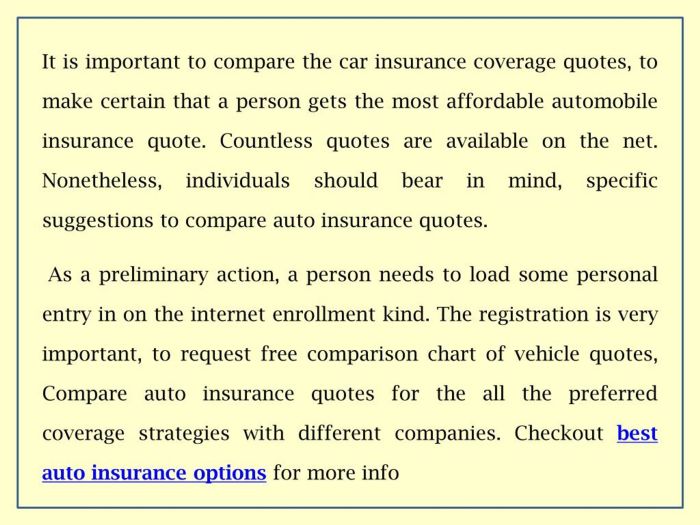
When comparing auto policy quotes from different insurance providers, it is essential to follow a systematic approach to ensure you are making an informed decision. Obtaining quotes from multiple companies, analyzing coverage details, deductibles, and premiums, as well as reviewing customer reviews and ratings are crucial steps in this process.Obtaining Multiple Quotes
- Reach out to various insurance companies either online or by contacting their agents directly to request quotes for the same coverage options.
- Provide accurate information about your driving history, vehicle details, and coverage needs to receive the most precise quotes.
- Compare quotes from at least three different providers to get a comprehensive view of the options available to you.
Comparing Coverage Details, Deductibles, and Premiums
- Examine the coverage details offered by each provider to ensure they meet your specific needs and requirements.
- Compare the deductibles for each policy, as this will impact the amount you pay out of pocket in the event of a claim.
- Evaluate the premiums quoted by each provider and consider how they fit into your budget while providing adequate coverage.
Reviewing Customer Reviews and Ratings
- Check online reviews and ratings of insurance providers to gauge the overall satisfaction of their customers.
- Look for feedback on claim processing, customer service, and overall experience to make an informed decision.
- Consider choosing a provider with a solid reputation and positive reviews from customers to ensure a smooth insurance experience.
Final Wrap-Up
In conclusion, mastering the art of comparing auto policy quotes effectively in the USA is essential for securing the most suitable coverage at the best rates. By considering all the factors, coverage options, and discounts available, you can confidently navigate the insurance landscape and make a well-informed choice that meets your needs and budget.
Essential Questionnaire
What are the main components of an auto insurance policy?
The main components include liability coverage, collision coverage, comprehensive coverage, uninsured/underinsured motorist coverage, and personal injury protection.
How do coverage limits affect policy quotes?
Higher coverage limits typically result in higher policy quotes, while lower limits may offer more affordable premiums. It's important to strike a balance between adequate coverage and manageable costs.
What are common discounts offered by insurance companies for auto policies?
Common discounts include multi-policy discounts, good driver discounts, safety feature discounts, and loyalty discounts. These can significantly lower your insurance costs.